
FRAUD DETECTION ENGINE
Stop identity and document fraud at the point of onboarding.
Real-time fraud detection built into the onboarding flow, not bolted on after the fact. Every verification scored for risk before a single account is opened or a single customer is approved.
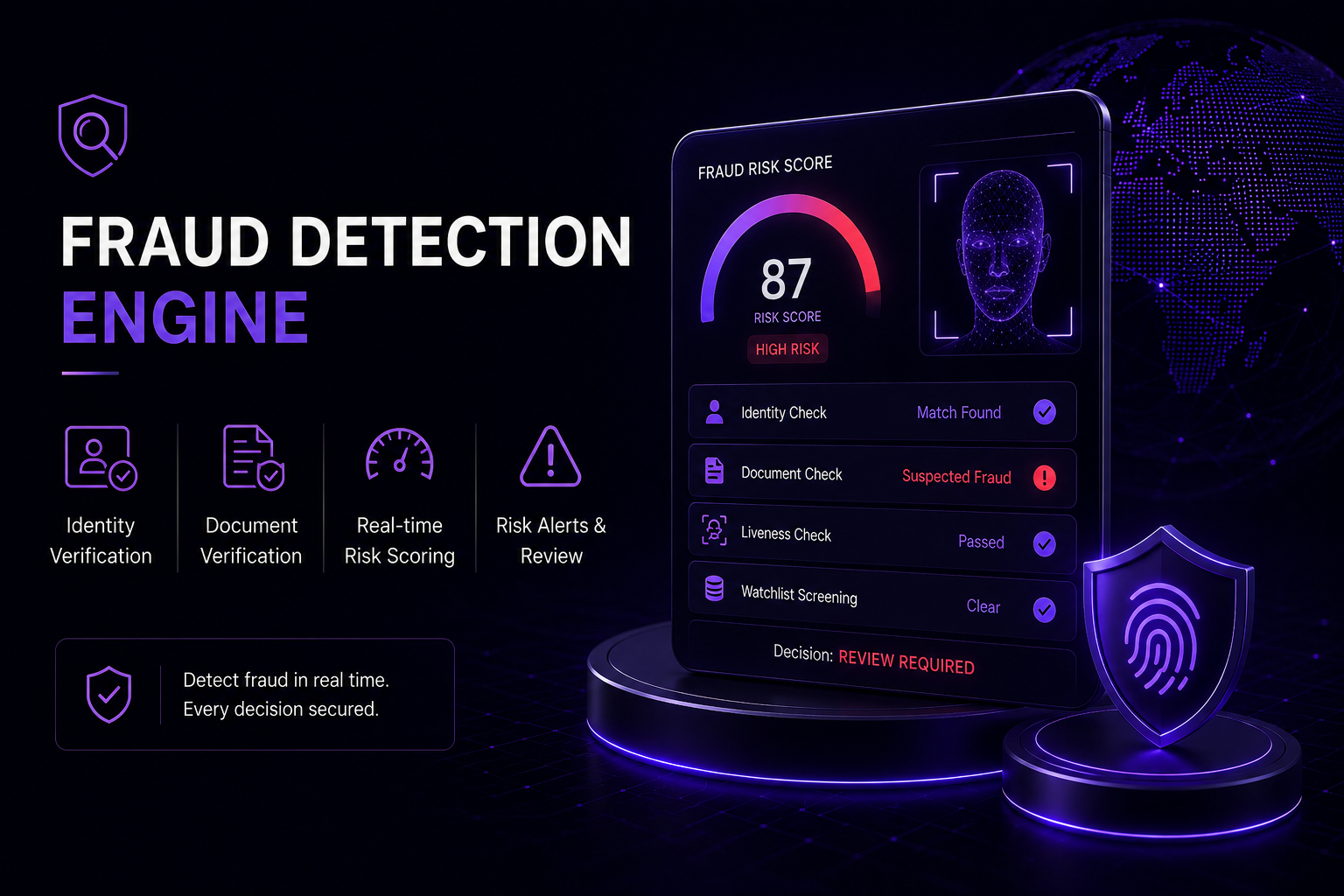
Daksam Analytics Fraud Engine runs during onboarding, not after it. Identity fraud and document fraud are the two points where organisations lose the most, and both happen before the customer is ever approved. The Fraud Engine scores every verification in real time, flags what falls outside your thresholds, and writes every decision to a blockchain-audited record. Your risk team sets the rules. The platform enforces them, consistently, at scale.
THE CHALLENGE
Fraud Caught After Onboarding
Is Fraud That Already Costs You
Most fraud detection runs on transactions. By the time it fires, the fraudster is already inside your system. The damage starts at onboarding, and that is where it needs to be stopped.
How It Works
Risk Scored at Every Step, Not Just the Last One
The Fraud Engine runs alongside every verification step in the onboarding flow. It does not wait for the identity check to complete before scoring risk. It builds the risk picture as the customer moves through the flow, drawing on every signal available at each step.
Document Authenticity
Every document submitted is checked for signs of tampering, forgery, and format inconsistency. Altered fields, mismatched fonts, and security feature anomalies are flagged automatically.
Identity Consistency
Name, date of birth, document number, and other data fields are cross-referenced for internal consistency. Combinations that do not add up are scored as higher risk before proceeding.
Liveness Signal
The liveness detection result feeds directly into the risk score. A low-confidence liveness result raises the overall risk score for that verification, triggering the appropriate review rule.
Watchlist Screening
Every identity is screened against AML watchlists, PEP registers, and sanctions databases in real time. Watchlist hits are weighted into the overall risk score automatically.
Risk Score and Decision
Every verification receives a final risk score. Your risk team configures the thresholds that determine automatic approval, manual review, or rejection. The platform applies them consistently at scale.
Platform Capabilities
Everything You Need to Detect and Decide
Every capability below is built into the Fraud Engine and runs automatically during the onboarding flow. Your risk team configures the thresholds. The platform does the rest.
Document Fraud Detection
Automated checks for altered, forged, and counterfeit documents. Security feature analysis, font consistency checks, and format validation run on every document submitted.
Identity Risk Scoring
Every verification receives a risk score built from document signals, identity consistency, liveness confidence, and watchlist results. Configurable per industry and customer segment.
Synthetic Identity Detection
Cross-references data fields across the submitted identity for combinations that indicate fabricated or blended identity profiles. Flags inconsistencies that pass individual checks but fail together.
Watchlist and AML Screening
Real-time screening against AML watchlists, PEP registers, and sanctions databases. Results weighted into the overall risk score and available in the session audit record.
Configurable Decisioning Rules
Your risk team sets the thresholds that determine automatic approval, manual review queue, and rejection. Rules configured directly in the platform without developer involvement.
Blockchain Audit Trail
Every fraud signal, risk score, and decision writes to an immutable blockchain record. What was flagged, what was decided, and when. Permanently locked and regulator-ready.
Risk Scoring
One Score. Every Signal. Your Thresholds.
The Fraud Engine does not produce a binary pass or fail. It produces a risk score built from every available signal at the point of verification. Your risk team decides what that score means for each customer segment, product type, or market.
Built From Multiple Signals
Document authenticity, identity consistency, liveness confidence, and watchlist results all contribute to a single risk score for every verification.
Weighted by Your Rules
Your risk team configures how each signal is weighted in the overall score. A watchlist hit carries different weight to a low-confidence liveness result. You decide the weighting.
Segmented by Context
Risk thresholds are configurable per product type, customer segment, and market. An NRI account opening carries different risk parameters to a domestic savings account.
Actionable in Real Time
The risk score triggers your configured decision rule the moment it is calculated. Automatic approval, manual review, or rejection applied consistently before the session closes.
Why Choose Us
Built for compliance. Designed for scale.
Four reasons banks, governments, and enterprises choose Daksam Analytics Fraud Engine to protect their onboarding from identity and document fraud.
Fraud Stopped at the Door
The Fraud Engine runs during onboarding, not after it. Every verification is scored before the customer is approved, which means fraud is stopped at the point it occurs rather than detected weeks later in a transaction review. The cost of catching fraud at onboarding is a fraction of the cost of catching it after an account has been used.
- Risk scoring runs at every verification step, not just the final check.
- Document fraud and identity fraud detected before account opening.
- Every flagged application recorded with full evidence in the audit trail.
Your Rules, Your Thresholds
No two institutions have the same risk appetite. The Fraud Engine is configured to your thresholds, your product types, and your customer segments. Your risk team sets every rule directly in the platform without raising a developer ticket, and changes are applied immediately across the entire onboarding flow.
- Thresholds configured per product type, segment, and market.
- Rules deployed the same day your risk appetite changes.
- No developer involvement required to adjust decisioning logic.
Blockchain-Audited by Default
Every fraud signal, risk score, and decision writes to an immutable blockchain record the moment it is generated. The record captures what was flagged, what threshold was applied, what the decision was, and the exact timestamp. It cannot be altered. When a regulator or auditor asks for evidence, the record is already there, complete and ready.
- Fraud signals and risk scores locked to blockchain at point of decision.
- Full evidence package available instantly for regulatory inspection.
- No editable log that admin access can change after the fact.
Built Into the Platform
The Fraud Engine is not a separate product you integrate alongside your onboarding flow. It is a component of the Daksam Analytics platform that runs inside the same verification flow as eKYC, VCIP, and the blockchain audit trail. One integration. Every capability available from the same platform instance.
- Runs inside the same platform as eKYC, VCIP, and blockchain audit.
- Single integration covers identity verification and fraud detection.
- Risk scores and verification records in one unified audit trail.
FAQ
What risk and compliance teams ask about the Fraud Engine.
The Daksam Analytics Fraud Engine is focused on identity fraud and document fraud at the point of onboarding. Identity fraud includes synthetic identities, where fabricated or blended identity data is used to create a profile that passes basic verification checks. Document fraud includes altered, forged, and counterfeit identity documents submitted during the onboarding flow. Both types are detected through automated scoring that runs during the verification session, before any account is opened or any customer is approved.
Every verification that passes through the Fraud Engine receives a risk score built from multiple signals: document authenticity checks, identity data consistency, liveness detection confidence, and watchlist screening results. Each signal contributes to an overall score, with weightings your risk team configures per product type, customer segment, and market. The score then triggers the decision rule your team has set: automatic approval, manual review queue, or rejection. The entire process runs in real time during the onboarding session.
Yes. Your risk team configures every threshold and decisioning rule directly in the platform without raising a developer ticket. If your risk appetite changes, if you launch a new product with different risk parameters, or if a regulatory requirement shifts the threshold you need to apply, your team makes that change and it is applied immediately across the entire onboarding flow.
The Fraud Engine is a component of the Daksam Analytics platform that runs inside the same verification flow as eKYC and VCIP. It is not a separate product. During an eKYC session, the Fraud Engine scores every verification step for fraud signals in real time and contributes to the overall risk decision. The identity verification and the fraud detection run together, and both write to the same blockchain audit trail. One integration covers both capabilities.
Fraud signals, risk scores, and session records are stored wherever your regulatory requirements demand. Daksam Analytics supports on-premises deployment, private cloud within your jurisdiction, and hybrid architecture. Data localisation is enforced at the infrastructure level. For Indian institutions, data stays within Indian infrastructure in line with RBI guidelines and the Digital Personal Data Protection Act. For Nigerian institutions, storage complies with NDPR. For UAE institutions, data stays within UAE infrastructure per CBUAE requirements.
The Daksam Analytics Fraud Engine is available for early access. Institutions interested in piloting the capability as part of their onboarding flow are invited to book a demo and discuss deployment timelines with the team directly.
See What Fraud Detection Looks Like When It Is Built Into Your Onboarding
Most demos walk you through someone else’s workflow on a generic platform. Ours is different. We show your document types, your risk thresholds, and your decisioning rules running live on Daksam Analytics infrastructure. Book 30 minutes and come with your fraud use case.